The Intersection of Probability and Operations Philosophy in Dicero's Minimalist Space
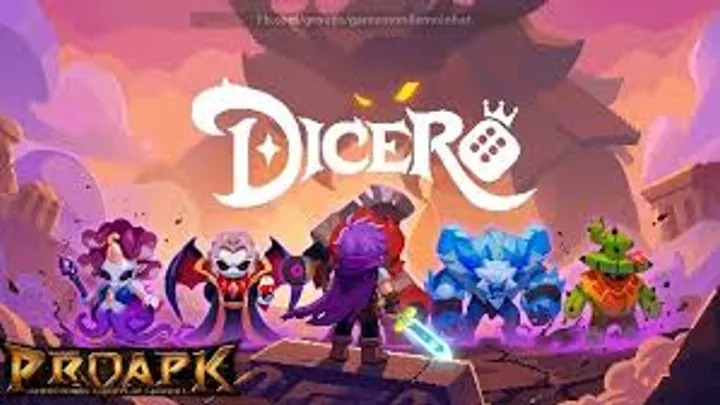
Modern video games often tend to complicate the visual world with heavy 3D graphics and lengthy, convoluted storylines that drag on for hours. In this context, Dicero—a mobile game in the dice-based Roguelite genre from the renowned publisher Habby—emerges as a proud counterpoint.By utilizing ancient hexagonal cubes combined with classic pixel art aesthetics, this game is more than just a fast-paced interactive form of entertainment. Its true depth lies in how it restructures the entire philosophical experience of randomness, transforming the lifeless numbers on the dice into a language expressing the heroic entity's struggle for survival. This article will delve into the inner workings of Dicero, stripping bare the layers of mathematical mechanics and system design behind its phenomenal success.
The essence of Roguelite games lies in the delicate balance between player control (Agency) and the chaos of the Random Number Generation (RNG) system. In most games of this genre, randomness is often hidden behind algorithms for item drops or randomly generated maps. However, this game places randomness at the center, openly displaying it on the interface in the form of five basic dice rolls. Each roll doesn't simply determine an attack stat; it's a complex mathematical function that opens up hundreds of compatible skill branches. This stark reality transforms each match into a continuous dialogue between human logic and the laws of probability and statistics.
To understand why a game with core gameplay involving simply rolling dice can be so deeply addictive, we need to dissect its micro-structure. The game doesn't rely on the mechanical reflexes of finger movements; instead, it taps into the brain's dopamine reward system through a "Power Boost" upgrade system. From initial talent fragments to complex seasons like "Quartz Mineral Veins," the game world is a linear evolution of the character, yet set within a non-linear environment of Roguelike challenges. This contrast creates a unique allure, where the player feels both a god controlling destiny and a mortal bowing before the shifting dice.
1. Mathematical Structure of Randomness and Poker-Style Combinatorial Systems
The core mechanism of the game is built on an extremely rigorous mathematical foundation inspired by traditional dice games and classic poker strategies. When a player presses the start button for a roll, the system generates five random results from 1 to 6. The combinations of these numbers are not scored using conventional mechanical summation, but are categorized into distinct power-level combinations. These combinations are the key to activating and shaping the intensity of the ultimate skills of the pixel hero character.
The system records sequences of results such as Royal Flush (five consecutive numbers), Four of a Kind (four identical numbers), Full House (three identical numbers combined with a matching pair), or Straight Flush. Each of these combinations possesses a unique probability function, directly determining the amount of damage or crowd control effect inflicted on the battlefield. The application of this probability theory transforms a purely random act into a strategic battle of wits, where players must constantly calculate the risk-reward ratio in milliseconds.
Players are not entirely powerless against the dictates of fate thanks to a mechanism that allows for up to three rerolls of selected dice. This mechanism shifts the game from a state of "pure randomness" to "active risk management." It forces the player's brain to make intermittent decisions: Should they keep a safe pair of 4s to activate a defensive skill, or risk splitting them up to hunt for the missing 5 to complete a devastating finishing move?
2. The Evolution of Talented Classes and the Depth of Heroic Growth
Contrary to its seemingly casual appearance, the character development system in this game boasts incredible depth through its talent tree and random equipment drop system. The hero character is not a fixed entity, but rather a blank canvas for players to freely sculpt through upgrade options after each challenge level.This progression is divided into two distinct axes: the permanent axis (Meta-Progression) outside the game and the immediate axis (In-Run Progression) occurring within the Roguelike labyrinth.
As players gather enough resources from their adventures, they can activate native talent buttons, increasing the chance of certain dice faces appearing or boosting basic stats like health, armor, and critical damage. However, the real appeal lies in the instant evolution system, where hundreds of unique skills can be unlocked and linked together to create devastating combos. A swordsman can evolve into a speed tyrant who triggers a chain of attacks whenever an even number is rolled, or transform into a formidable defensive line that reflects damage based on odd number combinations.
Analyzing the Character's Growth Axis
To better understand how the game distributes power to the character, we can observe the following two parallel support systems:
- Meta-Progression System: Focuses on altering the fundamental structure of the game's rules, such as adding free Rerolls, increasing the drop rate of rare items, or providing a one-time resurrection per game.
- Roguelike Skill System (In-Run Progression): Highly disruptive, directly altering the effects of dice combinations, transforming a normal "Four of a Kind" into a meteor shower or a shockwave that stuns all enemies.
3. The Curios System and the Growth Power from the Resonance Mechanism
The Curios system acts as an exponential power multiplier for players in the mid- and late game. Unlike regular equipment that only increases linear stats, Curios directly alter the operating rules of specific combat mechanics. The introduction of this system thoroughly addresses the monotony of higher-level gameplay by introducing a core concept: Curio Resonance.
When players collect and activate groups of Curios with the same origin or aesthetic attributes, a resonant energy flow is released. This resonance effect not only significantly increases the hero's overall attack power but also activates special passive skills, such as dealing area-of-effect damage to all enemies on screen at the start of the first roll. Optimizing this system requires a long-term strategic vision, as upgrade resources like Bless Stones are always in severe scarcity.
4. Resource Economic Crisis and the Art of Management - Bless Stones
In the game world, Bless Stones are the most powerful currency and the source of the most difficult decisions for players, especially those who play for free (F2P). These stones are used to perform the "Blessing" process for Curios, a mandatory step if players want to overcome the challenging milestones from Chapter 90 onwards. The unique aspect of this mechanism is the clear separation between Level and Rarity of items, creating a complex economic problem in resource allocation.
The mistake of haphazardly investing Bless Stones in low-quality Curios early in the game will lead to "stagnation" later on, where monsters increase in power exponentially while the player character falls behind due to a lack of high-quality materials. Therefore, experienced players often employ a two-stage management strategy: accumulating maximum resources in the early chapters through Co-op coin farming, and only spending all Bless Stones once they possess artifacts capable of optimally activating Resonance. This art of resource management transforms the game from a simple entertainment experience into a true test of patience and micro-financial planning skills.
5. Balancing RNG Setup and Player Control Skills
One of the most debated topics within the gaming community is whether the game is truly fair or if the RNG algorithms have been manipulated to slow down player progress, thereby encouraging the purchase of random item bundles in the shop. In reality, the nature of the dice-based Roguelite genre inherently brings a temporary feeling of helplessness when players repeatedly encounter unexpected outcomes (rolls that don't yield any desired combinations). However, Habby's system design demonstrates a sophisticated calculation to ensure that player control skills are always put to good use.
Analysis of Tactical Adaptation Mechanisms
The difference between an average player and a professional lies in their ability to adapt to the adverse effects of the numbers. When the system throws a bad result, the excellent player doesn't blame luck; instead, they use supplementary tools such as:
Specific Asterites
Use Asterite stones with counter-attributes to neutralize the monster's annoying characteristics such as dodge, continuous healing, or increased charge speed.
Backup Passive Skill System
Activate skills that don't require complex combinations, ensuring a minimum amount of damage or armor to survive the current round, preparing for a comeback in the next turn.
6. Pixel Aesthetic Design and its Power to Evoke Nostalgic Visual Emotions
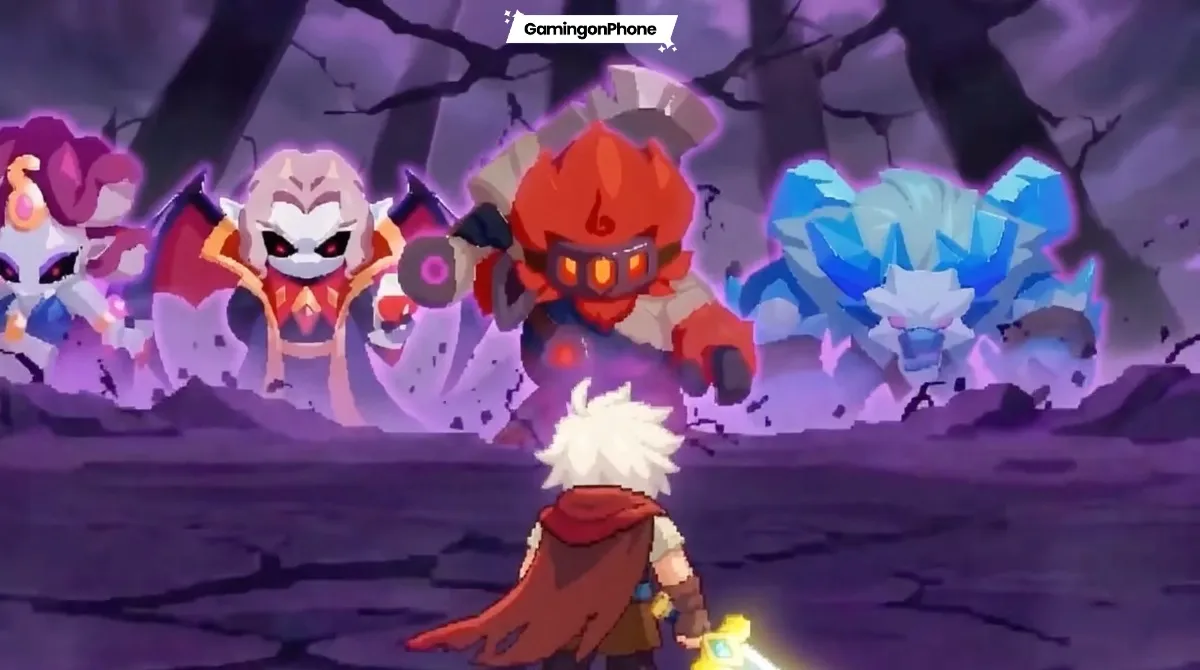
Undeniably, classic pixel art plays a crucial role in shaping the game's identity. Amidst a market flooded with games utilizing the flashy Unreal Engine graphics technology, Dicero chooses the sharp, rough yet incredibly refined lines of pixel art. This choice not only ensures smooth gameplay across all mobile device segments but also frees players' minds from excessive visual stimulation, allowing them to fully focus on the numbers and strategies on the screen.
However, pixel simplicity doesn't mean a lack of effects. Whenever a player successfully activates a legendary combination like a Royal Flush, the screen explodes with dazzling light effects and forceful camera shake (Juiciness in game design). The contrast between the static pixel squares and the dynamic streaks of light creates an intensely satisfying visual experience, transforming each battle into a mini-action feast brimming with energy.
7. The Structure of Seasons and Ecosystem Changes Through "Quartz Mineral Veins"
To retain players for an extended period, the game operates on a live-service model with a constantly changing season structure. The transition between seasons isn't simply about refreshing the leaderboard or adding a few eye-catching skins; it's about restructuring the entire strategic ecosystem of the game. The launch of Season 3, titled "Quartz Mineral Vein," is a prime example of this design philosophy.
The new season introduces a completely new interaction mechanism with the environment: quartz tiles appear randomly on the dice-rolling board. When a die lands on values compatible with a mineral vein, players can mine resources during the match to receive temporary power buffs or accumulate materials for crafting Crystal-based Illusion weapons. This mechanism forces players to abandon the old tactical approaches of the previous season, learn to adapt to and exploit the game's new rules, ensuring that the Roguelike experience remains fresh and never falls into the trap of repetitive boredom.
8. Co-op Mode and the Shift from Solitary Experience to Tactical Partnership
Initially, the game was designed as a solo experience where players interacted with their own dice rolls. However, the introduction of Co-op Mode in recent updates has created a major turning point, significantly expanding the game's tactical boundaries. In this mode, two players work together to confront bosses with massive health pools and extremely harsh restrictions.
The introduction of teammates has fundamentally changed the nature of dice management. Now, combinations not only serve individual interests but must also consider overall synergy. One player might build a purely support-oriented playstyle, specializing in creating shield combinations and increasing rerolls for teammates, while the other focuses entirely on building a purely damage-focused skill set to finish off targets. Habby's continuous optimization of this mode, such as reducing the number of tiers from 15 to 10 in the lower tiers and focusing on enhancing the number of dice rolls in the higher tiers, demonstrates their vision of transforming the game into a socially connected platform based on strategic thinking.
9. Behavioral Psychology Behind One-Handed Control Interface Design
The success of a mobile game depends heavily on its usability in real-life scenarios. This game brilliantly addresses this by designing an entire interface optimized for one-handed control. From the placement of the dice roll button and the selection boxes for holding units to activating skills, everything is conveniently within reach of the thumb.
This design is not simply a technological convenience; it's based on in-depth research into the behavioral psychology of modern mobile users. Players can easily experience a thrilling game while standing on a bus, waiting in line for coffee, or taking a few minutes of break between work hours. The lack of time pressure (no forced countdown timer during turns) allows players to pause at any time to handle real-life tasks and return immediately without interrupting the game. This freedom and flexibility transforms the game into an ideal companion, seamlessly fitting into the free time of busy lives.
10. The Future of Dice and the Limits of the Roguelite Genre
As the game continues to advance with large-scale updates, the question arises: What is the ultimate limit of the dice-based Roguelite genre? The reliance on the six-sided cube is both a solid foundation and a straitjacket limiting the game's creative potential. Adding too many new skills and equipment risks a "Power Creep" state, where old stats become useless and power inflation undermines the initially sophisticated probabilistic calculations.
However, given what the developers have shown in seasons like "Count's Castle" and "Crystal Vein," we have reason to expect sustainable evolution. The future of the game may not lie in simply increasing damage numbers, but in expanding new dimensions of interaction—such as introducing symmetric dice (8-sided or 12-sided dice) or asymmetric PvP modes. Whatever the next step, this work has left a lasting mark as an icon of transforming the simplest things into a high art of strategy.
Conclude
In summary, the game is not just a fleeting entertainment phenomenon fueled by the trendy Roguelite label; it's a work designed with a deep understanding of game theory, probability mathematics, and behavioral psychology. By staking the entire core experience on dice rolls, the game taps into humanity's primal instincts toward cosmic randomness, while simultaneously providing them with the strategic tools powerful enough to master that destiny. It's a hymn to minimalism, where pixelated squares and old-fashioned cubic faces are still powerful enough to create an endless world of adventure, captivating millions of minds with the relentless swirling of legendary dice.